Technical Differences Between Soft Start and Direct-on-Line Start for Fans and the Application Value of Fan VFDs

Liu Technician
Automation System EngineerFocused on industrial automation and VFD design, with 10 years of experience in industrial control system integration, specializing in factory automation transformation and energy management system implementation.
Key Points
- Direct-on-line start (DOL) can reach 5-7 times the rated current, while soft start can control the start current within 2-3 times the rated current
- Fan VFDs not only achieve smooth start but also achieve 30%-50% energy saving effect through speed regulation
- Direct-on-line start causes severe impact on motor windings and mechanical transmission components, reducing equipment lifespan by 30%
- The investment payback period for fan VFDs is usually 1.5-2 years, and long-term operation can significantly reduce comprehensive costs
Introduction
According to the Guangzhou Zhili Electronics 2025 Industrial Fan Technology Report, the choice of fan start method directly affects equipment performance, lifespan, and operational economy. Although traditional direct-on-line start is simple to operate, it has problems such as large start current impact, obvious power grid fluctuations, and mechanical stress affecting equipment lifespan on high inertia loads like fans. With the development of automation and equipment intelligence, fan VFDs have gradually become the preferred solution for fan start due to their good regulation performance and energy saving effects.
I. Essential Differences in Start Principles
1.1 Direct Impact Characteristics of Direct-on-Line Start
Direct-on-line start (DOL) is to directly connect the motor to the power supply with rated voltage, allowing the motor to start instantly at full voltage. This start method has no voltage or current buffer link, and the motor instantly bears the impact of full voltage.
- Huge start current: Usually up to 4-7 times the motor rated current, the instantaneous Joule heat will cause the motor winding temperature to rise sharply, accelerating insulation aging
- Concentrated mechanical stress: From zero speed to rated speed quickly, causing the mechanical transmission system to suddenly bear huge torque impact, leading to increased wear of bearings, gears, transmission belts and other components
- Significant power grid impact: High start current will cause the power grid voltage to drop instantly, causing other equipment on the same power grid to experience light flickering, voltage sensitivity, equipment failure and other problems
1.2 Smooth Transition Mechanism of Soft Start
Soft starters control the motor start process through semiconductor devices, achieving smooth motor start by gradually increasing voltage, effectively reducing the start current peak.
- Precise current control: Generally, the start current can be controlled within 2-3 times the rated current, reducing the impact on the power grid
- Smooth torque rise: Through electronic voltage regulation to control the motor acceleration process, making the fan gradually increase speed, reducing the start load of mechanical parts
- Intelligent protection functions: Integrated with overcurrent, overload, overheat protection and phase loss protection, can automatically stop in abnormal situations to avoid equipment damage
1.3 All-round Solution of Fan VFDs
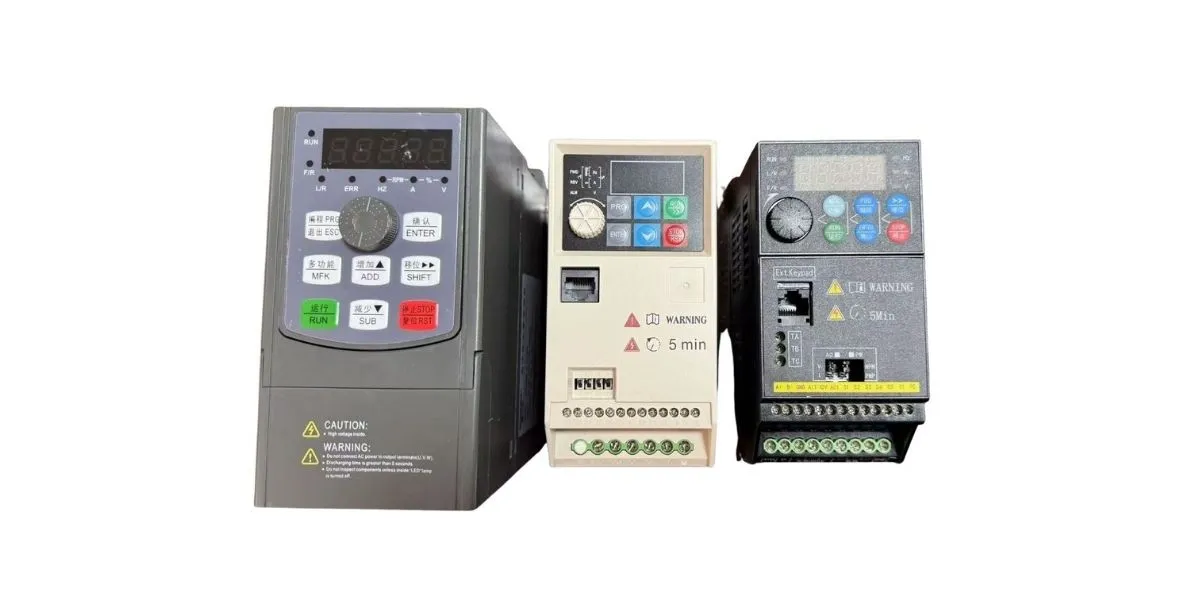
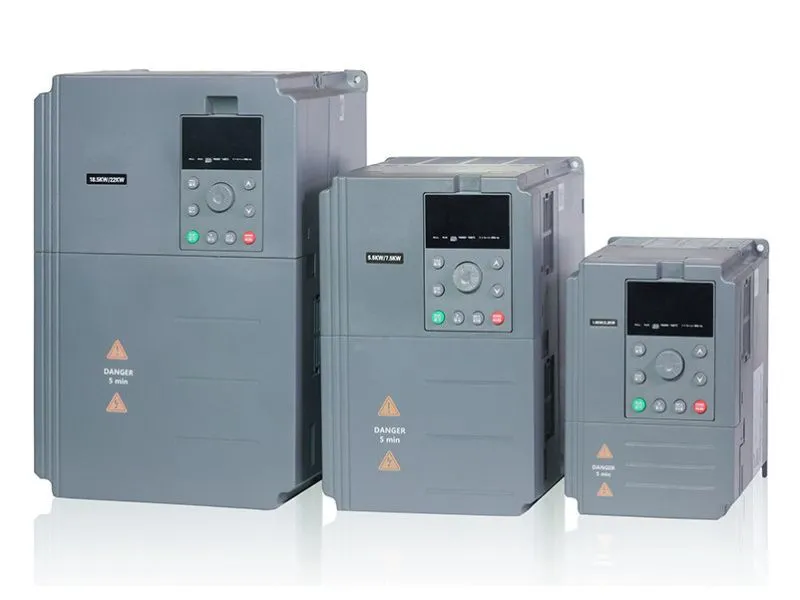
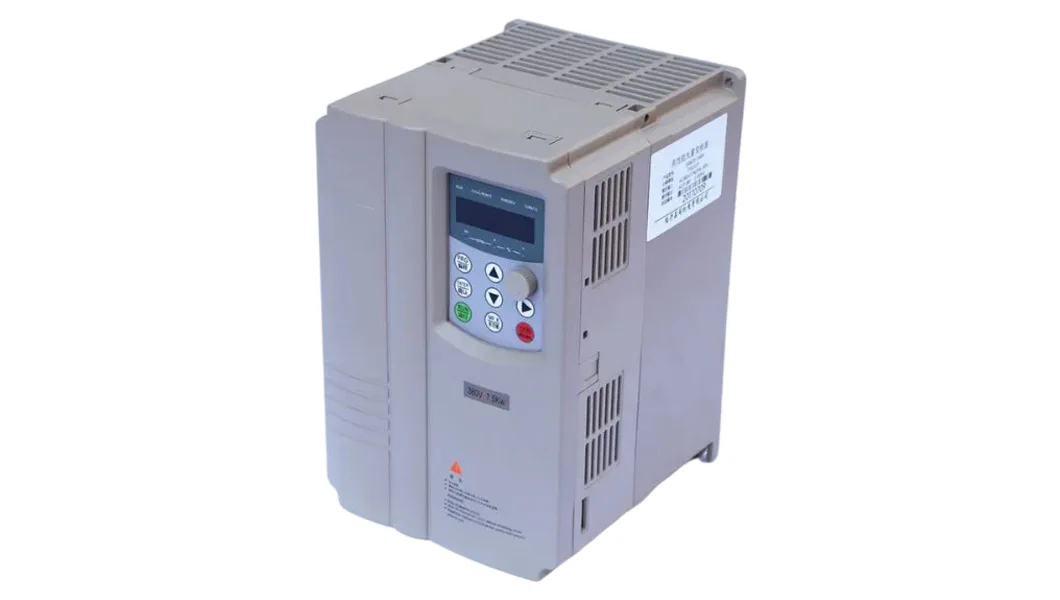
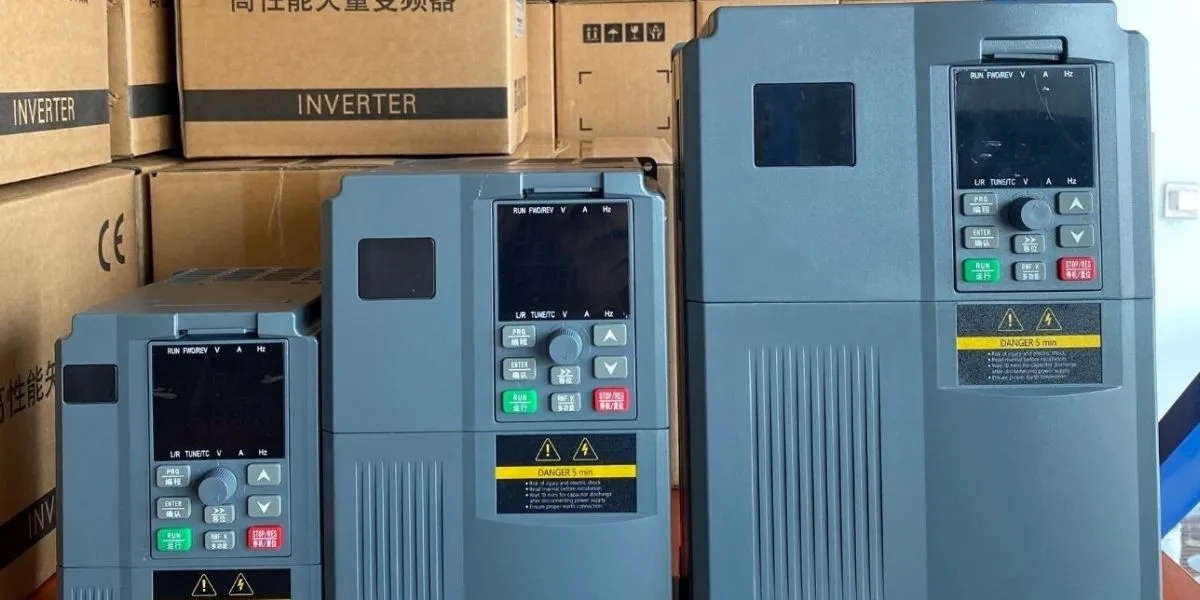
Fan VFDs are currently the most advanced start and control method, which controls the fan speed by changing the power supply frequency to the motor, achieving real smooth start and precise speed regulation. If you want to learn more about fan VFD products, you can check our VFD Product Center, where there are detailed product specifications and application cases.
- Minimum start current: Can control the start current within 1.2-1.5 times the rated current, almost eliminating start impact
- Wide speed regulation range: 0-400Hz continuously adjustable, can accurately control air volume and pressure according to actual needs
- Significant energy saving effect: The power consumption of fans is proportional to the cube of speed, reducing speed can significantly reduce energy consumption, energy saving rate can reach 30%-50%
II. Comparative Analysis of Performance Parameters
2.1 Start Characteristic Comparison
| Comparison Item | Direct-on-Line Start | Soft Start | VFD Start |
|---|---|---|---|
| Start Current Peak | 5-7 times rated current | 2-3 times rated current | 1.2-1.5 times rated current |
| Start Torque | 100%-150% rated torque | Usually no more than 60% rated torque | Can reach 150% rated torque |
| Start Time | 0.5-3 seconds | 3-60 seconds adjustable | Acceleration time can be freely set |
| Mechanical Impact | Severe | Small | Almost no impact |
2.2 Operation Performance Comparison
| Comparison Item | Direct-on-Line Start | Soft Start | VFD Start |
|---|---|---|---|
| Speed Regulation Ability | None | Fixed 50Hz | 0-400Hz continuously adjustable |
| Energy Consumption Performance | Fixed power | 1-2% voltage drop loss during operation | Full frequency band efficiency >95% |
| Harmonic Distortion Rate | None | ≤15% | ≤3% (with filter) |
| Protection Functions | Basic overload, phase loss protection | Basic overload, phase loss protection | Overcurrent/voltage/load, phase loss and other 30+ protection functions |
2.3 Economic Cost Comparison
10-year cycle comparison with 160kW motor as example:
| Cost Type | Direct-on-Line Start | Soft Start | VFD Start |
|---|---|---|---|
| Initial Investment | About 10,000 yuan | About 50,000 yuan | About 120,000 yuan (including filter) |
| Annual Operation Energy Consumption | Fixed power | No energy saving benefit | About 80,000 kWh saved annually (at 60% load rate) |
| Maintenance Cost | High (frequent parts replacement required) | Low (basically maintenance-free) | Medium (periodic electrolytic capacitor replacement required) |
| Equipment Lifespan | About 8-10 years | About 12-15 years | About 15-20 years |
III. Division of Typical Application Scenarios
3.1 Applicable Working Conditions for Direct-on-Line Start
Direct-on-Line start is only suitable for small power motors, and occasions with low start performance requirements, large power grid capacity, and able to withstand start impact.
- Applicable scenarios: Small lubricating oil pumps, cooling water pumps and other auxiliary equipment
- Limitations: Cannot meet the requirements of modern industry for energy saving, environmental protection and equipment lifespan
3.2 Advantage Fields of Soft Start
Soft start is suitable for high inertia load start, limited budget and no need for speed regulation occasions.
- Typical applications: Ball mills, compressors and other heavy load equipment start
- Case: A cement factory’s 355kW fan reduced start current from 1800A to 650A after adopting soft start, and the overhaul period was extended by 30%
If you need to learn more about soft starter products, you can check our Soft Starter Products page, where there are detailed product specifications and application cases.
3.3 Best Application Scenarios for Fan VFDs
Fan VFDs are suitable for occasions that require precise speed regulation, high energy saving requirements, and frequent load changes.
- Industrial field: Flow control of centrifugal pumps (energy saving rate up to 40%), tension adjustment of textile machinery
- Construction field: Chilled water pump control of central air conditioning systems, commercial building cooling tower fans
- Energy field: Forced draft fans in thermal power plants, wind power generating units
IV. Industry Standards and Specification Requirements
4.1 Electrical Design Standards
According to “Civil Building Electrical Design Standard” GB51348-2019:
- When motors start frequently, the voltage on the distribution bus should not be lower than 90% of the rated voltage
- When motors do not start frequently, the voltage on the distribution bus should not be lower than 85% of the rated voltage
- In civil buildings, except for fire protection equipment, large power water pumps and fans should adopt soft start devices
4.2 Special Requirements for Fire Protection Equipment
According to “Technical Specification for Fire Water Supply and Hydrant Systems” GB50974-2014:
- Fire pumps should operate at power frequency during fire, and fire pumps should start directly at power frequency
- When the power is large, star-delta and auto-transformer reduced voltage start should be adopted, active device start should not be adopted
- Active electrical components may increase failure rate due to power supply reasons, so fire protection equipment should not adopt VFDs
4.3 Energy Saving Policy Orientation
Under the national “dual carbon” goal, energy saving technology has become an inevitable trend in industrial development. Fan VFDs have become the preferred technology for energy saving renovation in various industries due to their significant energy saving effects.
V. Selection Decision and Implementation Suggestions
5.1 Selection Decision Tree
- Do you need speed regulation? Yes → choose VFD; No → proceed to next step
- Is it high power heavy load start? Yes → choose soft starter; No → proceed to next step
- Is the budget allowed? No → priority consider direct-on-line start; Yes → choose soft starter or VFD
- Are there harmonic sensitive devices? Yes → must choose VFD + filter solution
5.2 Implementation Notes
- VFD selection: Select suitable VFDs based on factors such as motor power, load characteristics, and use environment. If you want to quickly select a VFD model suitable for fans, you can use our VFD Selection Tool, which can quickly recommend suitable models based on specific parameters.
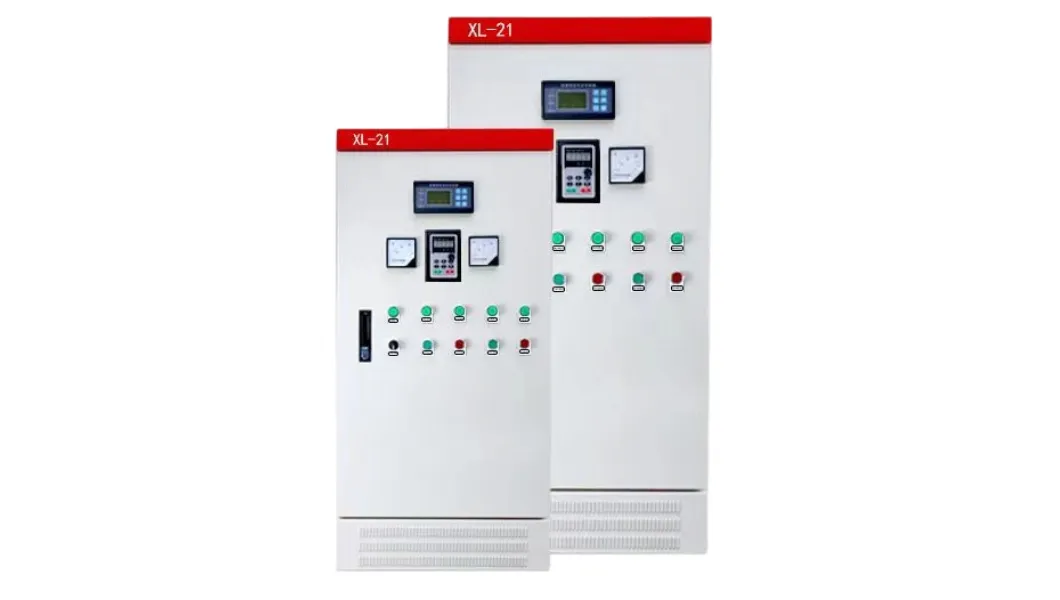
- Installation and commissioning: Ensure VFD and motor matching, correctly set parameters, and conduct necessary tests. If you need professional variable frequency control system solutions, you can check our Variable Frequency Drive Control Cabinet product, which integrates VFDs, control systems, and protection devices to provide a complete drive solution for fans.
- Maintenance: Regularly check the VFD operation status, clean the heat dissipation channels, and replace aging components
5.3 Investment Return Analysis
Taking the induced draft fan of a power plant after frequency conversion transformation as an example:
- Before transformation: Annual operation time 8000 hours, average speed is 90% of rated value, annual power consumption about 800,000 kWh
- After transformation: Average speed reduced to 70% of rated value, annual power consumption about 520,000 kWh, annual power saving about 280,000 kWh
- Investment return: Investment payback period is only 1.5 years, long-term operation benefits are significant
VI. Future Development Trends
6.1 Intelligent Evolution
New generation fan VFDs will integrate more intelligent functions, such as:
- Bearing wear early warning: Through vibration monitoring and data analysis, predict bearing failures in advance
- Energy efficiency optimization self-learning: Automatically learn load characteristics, optimize operation parameters, achieve maximum energy saving
- Remote monitoring and diagnosis: Realize remote monitoring, fault diagnosis and parameter adjustment through IoT technology
6.2 Green Energy Saving Technology
With the popularity of wide bandgap semiconductor (SiC/GaN) devices, the efficiency of fan VFDs will be further improved, and the volume and weight will be significantly reduced.
6.3 System Integration Solutions
Future fan control systems will be more integrated, integrating start, speed regulation, protection, monitoring and other functions into one system to achieve one-stop solutions.
Conclusion
Fan VFDs are currently the most advanced, energy-saving, and reliable fan start and control method. They not only achieve smooth start, protect motors and power grids, but also achieve significant energy saving effects through precise speed regulation. Although the initial investment is higher, from the perspective of long-term operation, its comprehensive cost is the lowest, and the investment payback period is short, making it the best choice for modern industrial fan systems.
As pointed out in the International Energy Agency 2025 Report, fan variable frequency speed regulation technology is one of the most potential technologies in the field of industrial energy saving. It is estimated that by 2030, variable frequency speed regulation can save about 10% of electricity consumption in the global industrial field. Enterprises should actively adopt advanced frequency conversion technology, improve equipment energy efficiency levels, and achieve sustainable development goals. If you want to learn more about industrial automation and energy saving solutions, you can check our Industrial Automation Solutions page, where there are more industry cases and technical solutions.